
How to Start Birding: A No-Nonsense Beginner's Guide

By Robert Hale · Founder & Field Editor, BirdLedger
Published January 1, 2026 · Last reviewed May 12, 2026
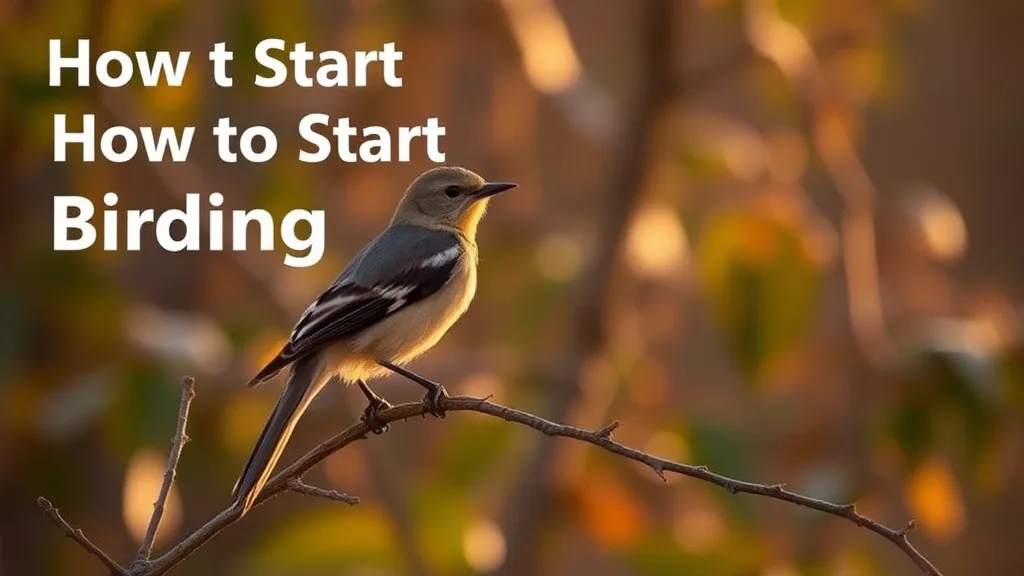
The thing that turns people into birders is almost never a field trip or a bird club or a pair of expensive binoculars. It’s a feeder. Specifically, it’s a feeder placed where they can see it from somewhere they already sit — a kitchen table, a home office window, a couch with a view of the yard. You don’t go looking for birds. You let birds come to you until you get curious enough to go looking.
| Aspect | What You Need | Tips for Beginners | Common Mistakes to Avoid |
|---|---|---|---|
| Equipment | Binoculars, Field Guide | Start with affordable gear | Overloading with expensive tools |
| Location | Local parks, Nature trails | Begin in familiar areas | Ignoring local bird hotspots |
| Observation | Patience, Quietness | Focus on behavior & calls | Rushing or making loud noises |
Step One: The Feeder
Put a tube feeder filled with black-oil sunflower seed within sight of a window where you spend time. That’s it. Within a few days, chickadees and house sparrows will find it. Within a few weeks, you’ll know their names, and you’ll start noticing that not every bird at the feeder looks the same. That noticing is where birding begins.
If squirrels are an issue in your area — and they usually are — spend the extra money on a squirrel-proof feeder from the start. Nothing ends a new birding setup faster than watching squirrels empty the feeder every morning.
See also: Vortex Diamondback HD 8x42 Review: Still the One to Beat Under $200?
Step Two: Binoculars
Once you’re watching feeder birds, you’ll want to see them more clearly. Don’t overthink this purchase. The Nikon Prostaff 3S 8×42 is $109 and a legitimate birding binocular — not a toy, not an apology for a binocular. It will serve you for years and won’t make you feel like you need to upgrade in six months.
If you already know this is going to be a serious hobby, start with the Vortex Diamondback HD 8×42 at $189. Better glass, better warranty, and you genuinely won’t need anything else for a long time.
8×42 is the right format. Not 10×, not 8×32. The reasons are practical: 8× is steady enough to hold without a tripod, 42mm gathers enough light for dawn and dusk, and the field of view is wide enough to track moving birds.
Step Three: A Field Guide
Buy the Peterson Field Guide to Birds of North America. It costs $22, uses arrows to point directly at the field marks that distinguish species, and has been teaching people to identify birds for 90 years. Don’t start with something comprehensive. Start with something that tells you where to look.
For more on choosing your first oscilloscope: a beginner”s guide, see our coverage at tinkerbench.co.
The 10 Birds You’ll See First
Before you can identify the interesting birds, you need to know the common ones so well you stop having to think about them. The feeder birds that show up in most North American backyards are: Black-capped or Carolina Chickadee, Tufted Titmouse (East) or Oak Titmouse (West), White-breasted Nuthatch, American Goldfinch, House Finch, Dark-eyed Junco (in winter), Downy Woodpecker, Blue Jay (East) or Steller’s Jay (West), House Sparrow, and American Robin. Learn these cold. Once they’re automatic, every other bird becomes the interesting one.
What Not to Do
Don’t start with rare bird alerts. Don’t drive two hours to see something unusual before you can identify the common birds in your own yard. Don’t buy expensive gear before you know you’ll use it. Don’t worry about building a life list yet.
The life list comes naturally. The app (Merlin, free from the Cornell Lab) is excellent for audio identification and recent local sightings — download it after you’ve been at this for a month or two. Don’t start with it; start with a physical guide and your own eyes.
Bottom Line
Feeder + window + 10 minutes of daily attention. That’s the whole formula for the first month. Add binoculars when you’re frustrated by not being able to see clearly. Add a field guide when you want to know what you’re looking at. The rest follows from there.
Once your feeder is established, consider adding a birdbath or water feature nearby. Birds are drawn to water for drinking and bathing, and it can attract species that might not visit feeders. Keep the water fresh and clean to prevent algae buildup, and consider a heated option in colder months. Avoid using chemicals or detergents — plain water is best. A shallow dish with textured edges works well, as it provides grip for smaller birds. Positioning it in an open but sheltered spot ensures birds feel safe while they splash around.
When it comes to field optics, binoculars are your next essential upgrade, but don’t feel pressured to buy the priciest pair. Look for models with 8x42 magnification, which offer a good balance of brightness and stability. Avoid binoculars with cheap plastic lenses or coatings; they’ll frustrate you in low light. Try before you buy, if possible, to ensure they feel comfortable in your hands and align with your eye width. A lightweight, water-resistant pair is ideal for beginners — you’ll want something durable but easy to carry on walks.
One common mistake new birders make is neglecting their feeder’s maintenance. A dirty feeder can spread diseases among birds, so clean it regularly with a mild soap solution and let it dry thoroughly before refilling. Also, avoid seed mixes with filler ingredients like milo or cracked corn, which many birds will ignore. Stick to black-oil sunflower seeds or nyjer thistle for finches. Finally, be patient — it can take weeks for birds to discover your setup. Once they do, though, you’ll have a front-row seat to a fascinating, ever-changing cast of characters.
FAQ
Q: What basic gear do I need to start birding?
A: At a minimum, you’ll need a pair of binoculars, a field guide or birding app, and comfortable clothing for outdoor observation.
Q: How do I choose the right binoculars for birding?
A: Look for binoculars with 8x42 or 10x42 magnification, as they offer a good balance of magnification, brightness, and portability for beginners.
Q: Where is the best place to start birding as a beginner?
A: Begin in your backyard or a local park, as these familiar environments are great for practicing identification and observing common species.
Q: How can I learn to identify birds more effectively?
A: Focus on key features like size, shape, color patterns, and behavior, and use a field guide or app to cross-reference your observations.


