
How to Identify Backyard Birds by Their Unique Beak Shapes

By Robert Hale · Senior Editor
Published January 1, 2026 · Last reviewed May 12, 2026
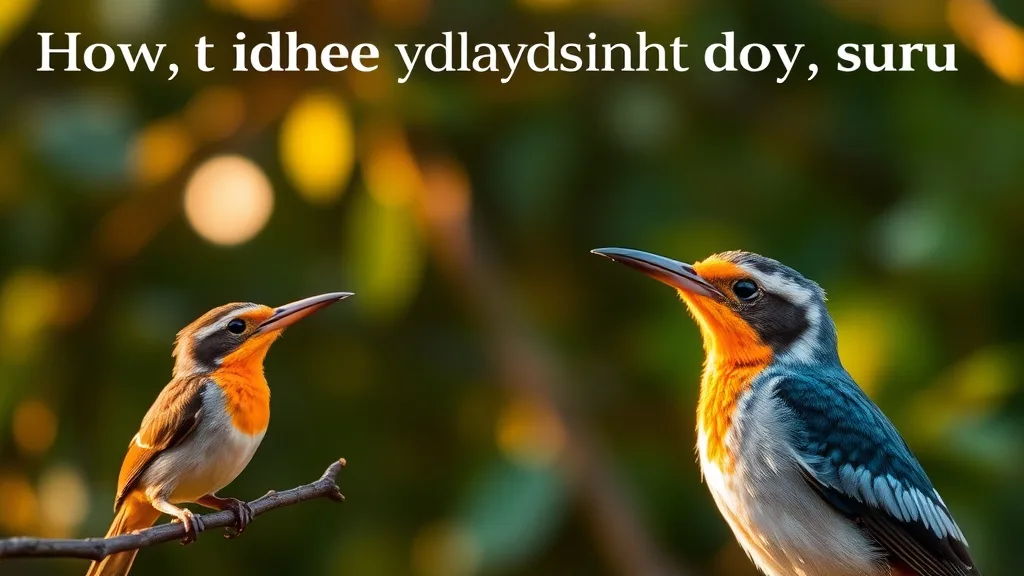
Backyard birding offers countless moments of joy, but often the birds you see can be hard to identify just by plumage, especially when the sun dips low or your view is brief. One of the most reliable clues to a bird’s identity is the shape of its beak — a signature that reveals its diet, habits, and even evolutionary niche. This guide will help you learn how to identify backyard birds by their unique beak shapes, making your birding more accurate and rewarding.
What Beak Shapes Tell Us About Birds
Bird beaks (or bills) are specialized tools adapted to each species’ feeding style and ecological role. By paying attention to subtle differences in length, width, curvature, and tip shape, you can narrow down what type of bird you’re observing even if color details are hard to distinguish.
Here are some common beak shapes you’ll encounter in backyard birds, with an explanation of what each is adapted for:
- Cone-shaped: Short and thick, perfect for cracking seeds and nuts.
- Thin and needle-like: Designed for probing flowers or bark for insects or nectar.
- Hooked: Curved downward and sharp, ideal for tearing flesh or extracting insects.
- Flat and wide: Often used to catch insects in flight or to filter food from water.
- Chisel-like: Strong and pointed for drilling into wood.
By learning these forms, you can immediately think in terms of feeding behavior, which reduces the identification pool significantly.
See also: Guide to Backyard Bird Identification Using Bird Calls and Songs
How to Identify Beak Shape in Your Backyard
1. Observe the Beak Proportion and Length
- Relative size: Is the beak longer than the bird’s head? Longer bills often belong to probing birds like hummingbirds or kingfishers.
- Width at base vs. tip: Thick bases tapering to a pointed tip are typical of seed-eaters, while uniform width is common in insectivores.
2. Note the Beak Curvature
- Straight: Indicates generalist feeders.
- Downward curve: Birds like vireos and some warblers have this for gleaning insects.
- Upward curve: Seen in birds that feed on larvae in bark crevices.
3. Examine the Tip Shape and Edges
- Pointed tips: Used for piercing or probing.
- Flat edged: Helpful for cracking open seeds.
- Serrated edges: Seen in fish-eating birds or those that grasp slippery prey.
4. Consider the Overall Context
- Habitat: Birds in your backyard have a limited range of food sources.
- Behavior: Is the bird feeding on seeds from feeders or probing under bark?
For example, a small bird with a stout, seed-crushing beak visiting your sunflower seed feeder is likely a finch or sparrow, while one with a long, thin bill visiting trumpet vine flowers is probably a hummingbird.
When to Use Beak Shape as an Identification Marker
- Poor lighting: When plumage color is muted.
- Partial views: When only side profiles or brief glimpses are possible.
- Juveniles: When feathers haven’t developed adult colors.
- Mixed flocks: To quickly sort different species.
Beak shape is most helpful early in the year when migration begins and many unfamiliar birds pass through your yard.
Common Pitfalls to Avoid
- Ignoring species size: Some beak shapes vary markedly with size; a large seedcracker might look similar in beak shape to a smaller bird, but size is a critical cue.
- Assuming all birds with a certain beak eat the same food: Some birds adapt multiple diets.
- Over-reliance on beak alone: Combine with other field marks for best results (e.g., song, behavior, body shape).
- Poor optic choices: Cheap binoculars can distort beak proportions, so use comfortable, clear, and reliable optics.
Comparison Table: Common Backyard Bird Beak Shapes and Their Identification Use
| Beak Shape | Typical Food Source | Example Behavior | Identification Tip | Common Backyard Birds |
|---|---|---|---|---|
| Cone-shaped | Seeds and nuts | Cracking open seeds at feeders | Look for broad base, stout tip | Sparrows, finches, grosbeaks |
| Thin and pointed | Nectar, insects | Hovering at flowers | Very thin with slight curve | Hummingbirds, warblers |
| Hooked | Insects, small prey | Grabbing/tearing prey | Strongly curved tip | Shrikes, some raptors |
| Flat and wide | Insects in flight, filter-feeding | Flying & snapping midair | Broad at base, flattened | Swallows, ducks |
| Chisel-like | Wood boring for insects | Drilling into bark | Straight, pointed, stout | Woodpeckers, flickers |
Enhancing Your Birding Through Beak-Shape Recognition
- Use optics with good close-focus ability: This lets you examine subtle beak details without disturbing the bird.
- Practice sketching or photographing beaks: Helps solidify memory.
- Cross-reference with field guides: Many guides categorize birds by beak shape.
- Observe feeding stations: Controlled environments let you watch beak use closely.
- Be ethical: Never flush birds just to get a better look at beak shapes or use playback to lure them repeatedly.
Frequently Asked Questions
Q: How close do I need to be to see beak details?
A: About 10-30 feet with good binoculars provides enough detail without disturbing the bird.
Q: Can I use beak shape to identify all bird species?
A: Beak shape is a valuable clue but should be used along with size, plumage, and behavior for best accuracy.
Q: What if a bird’s beak looks unusual or damaged?
A: Some birds may have worn or broken bills; focus on general shape and other field marks instead.


