
Best Spotting Scopes for Birding in 2026

By Robert Hale · Founder & Field Editor, BirdLedger
Published January 1, 2026 · Last reviewed May 12, 2026
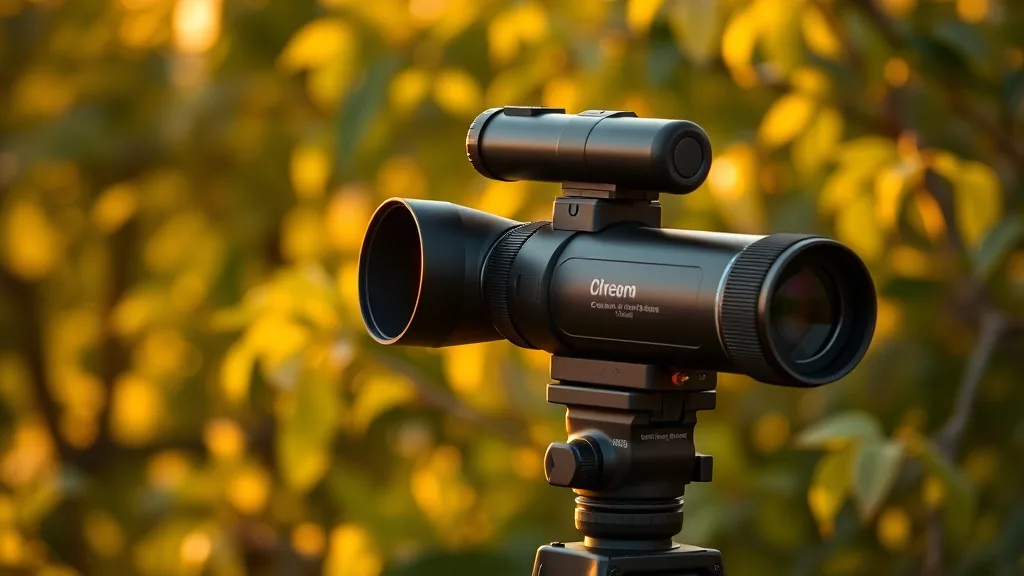
Binoculars cover most birding situations. A spotting scope covers the ones they don’t — shorebirds working a mudflat 300 yards out, a hawk perched on a distant ridge, a flock of ducks too far for any 8× glass to resolve. If you’ve found yourself staring at a smudge of brown on the far side of a marsh wishing you could see more detail, a scope is the answer.
Angled vs Straight Body
This is the first decision and it matters. An angled scope has the eyepiece set at 45° to the body. A straight scope has eyepiece and objective in line.
Angled wins for most birding. It’s easier to share with people of different heights without moving the tripod, more comfortable for scanning at low elevations (you tilt the tripod head slightly rather than crouching), and generally better for long sessions. The trade-off is a slight learning curve when acquiring fast-moving birds.
Straight scopes feel more intuitive for quick target acquisition. If you’re doing active hawk watching from a ridge and spending more time acquiring targets than studying them, straight has merit. Otherwise, angled.
See also: 5. What Is Eye Relief and Why It Matters if You Wear Glasses While Birding
Magnification and Zoom
Most spotting scopes are sold as zoom models — 20-60× is the standard range. At 20×, you get a wide, bright image for scanning. At 60×, you get detail at the cost of brightness and a narrower field. In practice, most birders spend most of their time at 25–35×. Past 45× on a budget scope, atmospheric shimmer and image softness outpace the magnification benefit.
Fixed eyepieces exist and often give better image quality for their size, but zoom is more practical for birding.
The Picks
Best Overall: Vortex Optics Diamondback HD 20-60×85 Spotting Scope — $449
The 85mm objective is the largest on this list and it shows. Light transmission is noticeably better than the 65mm alternatives at dusk and in overcast conditions. The HD glass controls chromatic aberration well for the price — there’s some color fringing at 60× in backlit situations but it’s manageable. The angled body and rotating tripod mount ring make setup fast. At $449 this is a real investment, but it’s the scope you won’t need to replace for a decade.
Requires a tripod — the Manfrotto Compact Action Tripod at $59 is the right companion at this price tier. Smooth fluid head, light enough to carry, sturdy enough for a scope up to 3 lbs.
Best Mid-Range: Celestron Regal M2 80ED Spotting Scope — $349
The ED (extra-low dispersion) glass element makes a real difference in chromatic aberration control. Colors are cleaner and edge contrast is tighter than you’d expect at this price. The 80mm objective is a step down from the Vortex’s 85mm but the glass quality partially compensates. Available in angled or straight; take angled. This is the scope I’d recommend for someone who wants better glass without reaching into the $500+ tier.
Best Budget: Bushnell Trophy Xtreme 20-60×65 Spotting Scope — $199
The 65mm objective limits low-light performance relative to the 80mm+ options, and the glass coatings are a step behind. At 60× the image gets noticeably soft. But at 20-35× in good light, it performs well enough for shorebirding and hawk watching from fixed positions. Waterproof and fog-proof. If $350+ is out of range, this gets you into the category without wasting money on something worse.
Mid-Tier Alternative: Celestron TrailSeeker 80 Angled Spotting Scope — $269
Slots between the Bushnell and the Regal M2. The 80mm objective and fully multi-coated optics give better low-light performance than the Trophy Xtreme. No ED glass, so chromatic aberration is more visible than the Regal M2 at high magnification. A solid choice if $349 is a stretch but $199 feels inadequate.
Comparison Table
| Model | Price | Objective | Glass | Body Style |
|---|---|---|---|---|
| Vortex Diamondback HD 20-60×85 | $449 | 85mm | HD | Angled |
| Celestron Regal M2 80ED | $349 | 80mm | ED | Angled/Straight |
| Celestron TrailSeeker 80 | $269 | 80mm | Multi-coated | Angled |
| Bushnell Trophy Xtreme 20-60×65 | $199 | 65mm | Multi-coated | Angled |
You Need a Tripod
A spotting scope without a tripod is a camera without a shutter — technically present, functionally useless. At 30×, the slightest hand movement makes the image impossible to read. The Manfrotto Compact Action is the minimum viable tripod for field use: fluid pan head, folds to 18 inches, holds up to 3.3 lbs. Budget for it when you budget for the scope.
Bottom Line
If the money is there, buy the Vortex Diamondback HD 20-60×85. The 85mm aperture and HD glass represent a genuine step up from the alternatives at this price, and the VIP warranty means you’re buying it once. Pair it with the Manfrotto tripod. If $449 is out of reach, the Celestron Regal M2 80ED is the better glass-per-dollar option among the rest.
FAQ
Q: What magnification range is best for birding spotting scopes?
A: A magnification range of 20-60x is ideal for birding, offering a balance between detail and field of view. Lower magnifications (20-30x) are great for tracking moving birds, while higher magnifications (40-60x) help observe fine feather details.
Q: Are waterproof and fog-proof features important for birding scopes?
A: Yes, waterproof and fog-proof scopes are essential for birding, as they ensure reliability in various weather conditions. These features protect the optics from moisture and temperature changes, which are common in outdoor environments.
Q: How does lens quality affect spotting scope performance?
A: High-quality lenses with fully multi-coated or ED (Extra-Low Dispersion) glass provide sharper, brighter images with better color accuracy. Poor lens quality can result in chromatic aberration and reduced clarity, especially at higher magnifications.
Q: What tripod should I pair with my birding spotting scope?
A: Choose a sturdy, lightweight tripod with a smooth pan-and-tilt head for stability and ease of use. Carbon fiber tripods are a great option for portability, while heavier-duty models offer better stability in windy conditions.


