
Robert Hale · Founder & Field Editor, BirdLedger
Former naturalist guide and lifelong birder from Vermont. Robert has spent two decades in the field—from boreal bogs to Gulf Coast shorelines—and built BirdLedger to help birders make smarter gear decisions.
Best Birding Scopes for Long Distance Observation
By Robert Hale · Founder & Field Editor, BirdLedger
Published May 28, 2026
BirdLedger is reader-supported. When you buy through links on our site, we may earn an affiliate commission. This doesn’t influence our reviews, which are conducted independently and reflect our honest opinion of the gear.
Best Birding Scopes for Long Distance Observation
Birding scopes, also known as spotting scopes, are a game-changer when binoculars just aren’t enough. Whether you’re identifying distant shorebirds, observing raptors soaring high overhead, or simply want a closer look at a feeder across the yard, a good birding scope brings the birds to you. But with so many options available, choosing the right one can feel overwhelming. This guide will walk you through the key features to consider and recommend some of the best birding scopes for different needs and budgets.
What to Look for in a Birding Scope
Before diving into specific recommendations, let’s cover the essential factors that separate a good birding scope from a frustrating one.
Magnification and Objective Lens Size
These two numbers are usually presented together (e.g., 20-60x80). The first number represents the magnification range, and the second is the diameter of the objective lens (the large lens at the front of the scope) in millimeters.
- Magnification: Higher magnification lets you see greater detail at a distance, but it also reduces the field of view and makes the image more susceptible to shaking. A zoom eyepiece (like 20-60x) offers versatility, allowing you to scan at lower magnification and then zoom in for a closer look. For most birding situations, a magnification range of 20-60x is ideal.
- Objective Lens Size: A larger objective lens gathers more light, resulting in a brighter and clearer image, especially in low-light conditions. However, larger lenses also make the scope heavier and bulkier. For birding, an objective lens size of 60mm to 85mm is a good compromise between image quality and portability.
Optical Quality (Glass and Coatings)
The quality of the glass and the coatings applied to the lenses significantly impact the image’s brightness, sharpness, and color fidelity.
- Glass Type: ED (Extra-low Dispersion) glass is highly desirable. It minimizes chromatic aberration (color fringing), resulting in sharper and more accurate images, especially at high magnifications.
- Lens Coatings: Look for scopes with fully multi-coated lenses. This means that all air-to-glass surfaces have multiple layers of coating to reduce reflections and increase light transmission. Cheaper scopes might only have coated or multi-coated lenses, which offer less performance.
Body Design and Features
- Waterproof and Fogproof: Essential for birding in various weather conditions. Look for scopes that are nitrogen-purged or argon-filled to prevent internal fogging.
- Focusing Mechanism: A smooth and precise focusing mechanism is crucial for quickly acquiring sharp images. Dual-focus systems (coarse and fine focus) are especially helpful.
- Eye Relief: If you wear glasses, eye relief is critical. It’s the distance between the eyepiece lens and your eye where you can still see the full field of view. Look for scopes with at least 15mm of eye relief. Consider reading up on What Is Eye Relief and Why It Matters if You Wear Glasses While Birding.
- Rotating Tripod Collar: This allows you to rotate the scope 360 degrees without moving the tripod, making it easier to follow moving birds.
- Weight and Size: Consider how often you’ll be carrying the scope in the field. Lighter and more compact scopes are easier to pack and carry, but they may compromise on optical performance.
Tripod Considerations
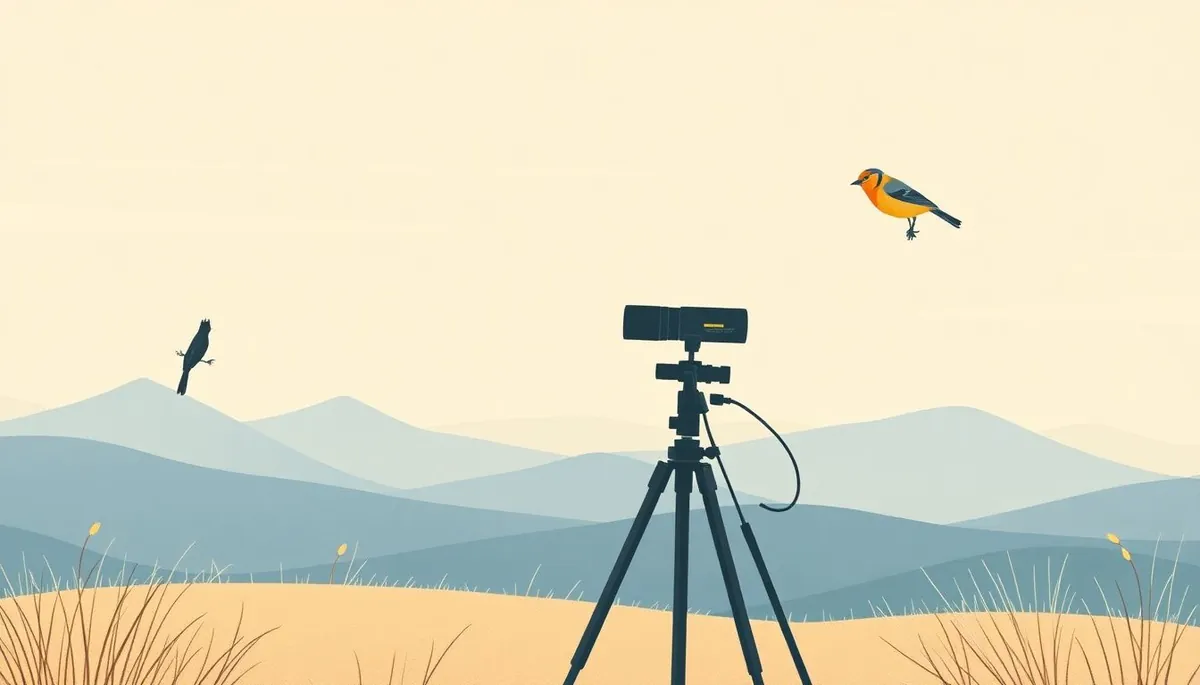
A sturdy tripod is essential for using a birding scope effectively. The tripod should be stable enough to support the weight of the scope and resist vibrations, especially in windy conditions. Look for tripods with:
- Fluid Head: Provides smooth panning and tilting movements, making it easier to follow birds.
- Adjustable Height: Allows you to set the scope at a comfortable viewing height.
- Quick-Release Plate: Makes it easy to attach and detach the scope from the tripod.
Recommended Birding Scopes
Here are some of the best birding scopes in different price ranges, considering the factors discussed above:
Budget-Friendly Option: Celestron Ultima 80
- Key Features: 80mm objective lens, 20-60x zoom eyepiece, multi-coated optics, waterproof, and comes with a soft carrying case.
- Pros: Affordable, decent image quality for the price, and relatively lightweight.
- Cons: Optical quality isn’t as good as more expensive scopes, and the tripod (sold separately) may need to be upgraded for optimal stability.
- Why it’s good: A good starting point for birders who want to try a scope without spending a fortune.
Mid-Range Option: Vortex Diamondback HD 20-60x85
- Key Features: 85mm objective lens, 20-60x zoom eyepiece, HD (High Density) glass, fully multi-coated optics, waterproof and fogproof, rotating tripod collar.
- Pros: Excellent image quality for the price, durable construction, and comes with a lifetime warranty.
- Cons: Heavier than some other scopes in its class.
- Why it’s good: A great value for birders who want high-quality optics without breaking the bank. If you’re already familiar with the Vortex Diamondback line, you know the quality. Consider that the Nikon Monarch M5 vs Vortex Diamondback HD [4] article does a good job of comparing similar models.
High-End Option: Swarovski ATS/STS 80 HD
- Key Features: 80mm objective lens, HD glass with fluoride, fully multi-coated optics, waterproof and fogproof, lightweight magnesium alloy body, and exceptional optical performance.
- Pros: Unrivaled image quality, bright and sharp images even in low light, and extremely durable.
- Cons: Very expensive.
- Why it’s good: The gold standard for birding scopes. If you demand the best possible image quality and are willing to pay for it, the Swarovski ATS/STS is the way to go.
Angled vs. Straight Body
Birding scopes come in two main body styles: angled and straight.
Angled Body
- Pros: More comfortable for viewing birds at high angles (e.g., in trees or overhead), allows for a shorter tripod, and can be shared more easily among people of different heights.
- Cons: Can be more difficult to locate birds quickly, especially when tracking moving targets.
Straight Body
- Pros: Easier to locate birds quickly and track moving targets, more intuitive to use.
- Cons: Can be less comfortable for viewing birds at high angles, requires a taller tripod, and may not be as comfortable for sharing among people of different heights.
Which is right for you? It depends on your personal preferences and birding habits. If you primarily observe birds at high angles or share the scope with others, an angled body might be preferable. If you prioritize ease of use and quick target acquisition, a straight body might be a better choice.
Tips for Using Your Birding Scope Effectively
- Practice: Get familiar with the scope’s controls (focusing, zooming) before heading into the field.
- Use a Tripod: A stable tripod is essential for getting the most out of your scope.
- Find a Stable Base: When using the tripod, ensure that all three legs are firmly planted on the ground. Avoid using it on soft or uneven surfaces.
- Start with a Low Magnification: Begin with a lower magnification to locate the bird, then zoom in for a closer look.
- Focus Carefully: Take your time to fine-tune the focus for the sharpest possible image.
- Consider a Stay-On Case: A stay-on case protects the scope from scratches and bumps while allowing you to use it without removing the case.
Choosing the right birding scope can dramatically improve your birding experience, allowing you to observe birds in greater detail and at greater distances. By considering the factors outlined in this guide and exploring the recommended scopes, you can find the perfect scope to match your needs and budget. And now that you have a long-distance view, you might want to attract more birds to your yard in general by setting up a backyard bird feeding station that actually works [9].